
Today (26 November 2026) at 13.30 hrs., the annual Joint Press Conference was held to announce the 35th Prince Mahidol Award Laureates for 2026 at the Prince Mahidol Memorial Room, 2nd Floor, Syamindra Building, Siriraj Hospital, by Professor Keerati Chareancholvanich, Dean of the Faculty of Medicine Siriraj Hospital, Mahidol University, as Vice President of the Prince Mahidol Award Foundation; Emeritus Clinical Professor Supat Vanichakarn, Secretary General of the Prince Mahidol Award Foundation under the Royal Patronage; Ms. Jaithai Upakarnitikaset, Director-General of the Department of Information, Ministry of Foreign Affairs, as Chairperson of the Sub-Committee on Public Relations of the Prince Mahidol Award Foundation; and Emeritus Professor Dr.Prasit Watanapa, Chairman of the International Award Committee of the Prince Mahidol Award Foundation.
The Prince Mahidol Award 2026 in the field of Medicine is awarded to
Professor Dr. Jan A.M. Deprest, M.D., Ph.D, the Kingdom of Belgium.
Professor Dr. Koonlawee Nademanee, M.D., the Kingdom of Thailand.
The Prince Mahidol Award 2026 in the field of Public Health is awarded to
Emeritus Professor Dr. Juan A. Rivera Dommarco M.S., PhD.,
the United Mexican States.
In addition to 106 nominations from 32 countries in 2026, the Scientific Advisory Committee also meticulously reviewed past applications from 2023 – 2025 before submitting a short list of candidates to the International Award Committee for the latter’s recommendation to the Board of Trustees, which held a meeting on 3 November 2026, presided over by H.R.H. Princess Maha Chakri Sirindhorn, to make the final selection for the Prince Mahidol Award 2026.
Over the past 34 years, the Prince Mahidol Award has been conferred to 100 individuals, groups of individuals, and institutions. Among the Laureates, 4 were Thai nationals. In 1996, the Prize in Medicine was awarded to both Professor Dr. Prasong Tuchinda, for studying the effects of the Dengue virus on children with disabilities with dengue hemorrhagic fever, and Professor Dr. Suchitra Nimmannitya, for classifying the severity levels of the dengue hemorrhagic fever. In addition, the 2009 Award in Public Health was conferred to Dr. Wiwat Rojanapithayakorn for his project to promote the use of condom to prevent the spread of HIVs and to Mr. Mechai Viravaidya for his communication campaign to encourage the use of condoms.
The following Prince Mahidol Laureates have later won the Nobel Prize :
(1) Professor Barry J. Marshall from Australia received the Prince Mahidol Award in the field of Public Health in 2001 for his discovery of a new bacterium, identified as Helicobacter pylori, which causes gastric ulcers, and then received the Nobel Prize in the field of Medicine in 2005;
(2) Professor Emeritus Dr. Harald Zur Hausen from Germany received the Prince Mahidol Award in the field of Public Health in 2005 for his discovery of the virus that causes cervial cancer and then to received the Nobel Prize in the field of Medicine in 2008;
(3) Professor Satoshi Omura from Japan received the Prince Mahidol Award in the field of Medicine in 1997 for his research on the microorganism Streptomyces avermitilis, which contributed to the development of the drug ivermectin, currently being used for the treatment and prevention of river blindness and lymphatic filariasis, and then received the Nobel Prize in the field of Medicine in 2015;
(4) Professor Tu You You, a member of the China Cooperative Research Group on Qinghaosu and its Derivatives as Antimalarials from China, received the Prince Mahidol Award in the field of Medicine in 2003 for her study on the Qinghaosu extract, which led to the development of an antimalarial drug, and then received the Nobel Prize in the field of Medicine in 2015;
(5) Sir Gregory Paul Winter from the United Kingdom received the Prince Mahidol Award in the field of Medicine in 2016 for his pioneership in the field of antibody engineering and modification technology, contributing to the humanization of antibodies, which then led to the development of new classes of cutting-edge biopharmaceuticals. He then received the Nobel Prize in the field of Chemistry in 2018;
(6) Professor Dr. Katalin Karikó from Hungary/the United States of America and Professor Drew Weissman from the United States of America received the Prince Mahidol Award in the field of Medicine in 2021 for their timely research on the development of COVID-19 mRNA vaccine in response to the pandemic, contributing to the decrease of infections and severe illness. Their research also served as an essential tool which helped contain the outbreaks of the virus around the world, thereby benefiting the health and lives of hundreds of millions of people globally. Both also received the Nobel Prize in the field of Medicine in 2023;
The Prince Mahidol Award Foundation under the Royal Patronage was established on 1 January 1992 in commemoration of the 100th Anniversary of the birth of His Royal Highness Prince Mahidol of Songkla. With Her Royal Highness Princess Maha Chakri Sirindhorn as the President, the Foundation annually presents two Prince Mahidol Awards to individual(s) or institution(s) with outstanding and exemplary contributions to the advancement of the international medical and public health services. Each Award consists of a medal, a certificate, and a prize of 100,000 USD.
* * * *
Prince Mahidol Award Laureate 2026
Field of Medicine
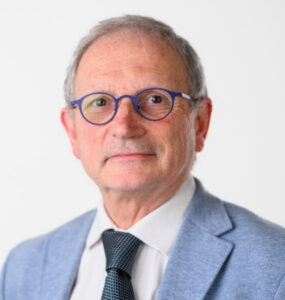
Professor Docter Jan A.M. Deprest, M.D., Ph.D
Professor of Obstetrics and Gynaecology at Katholieke Universiteit Leuven (KU Leuven),
Kingdom of Belgium, and University College London (UCL),
The Kingdom of Belgium.
Professor Docter Jan A.M. Deprest earned his Doctor of Medicine (M.D.) degree and completed his residency in Obstetrics and Gynaecology at Katholieke Universiteit Leuven (KU Leuven), Kingdom of Belgium. He subsequently pursued advanced training in female pelvic medicine and reconstructive surgery (urogynaecology) in the United Kingdom, and in fetal therapy at Leiden University Medical Center, Kingdom of the Netherlands. His doctoral research focused on advancing fetal surgery from open maternal-fetal surgery to minimally invasive endoscopic techniques—laying a vital foundation for his pioneering innovations in fetal therapy.
Professor Deprest’s research played a pivotal role in transforming fetal surgery from an anecdotal, last-resort intervention into a robust, evidence-based medical discipline with clear patient selection criteria, standardized procedures, and clinical protocols. His landmark contributions include initiating and establishing international research collaborative networks to conduct randomized controlled trials. This work produced the highest level of scientific evidence confirming the efficacy of laser coagulation of communicating placental vessels for twin-to-twin transfusion syndrome, as well as fetoscopic endoluminal tracheal occlusion (FETO) for severe congenital diaphragmatic hernia. Both treatments have significantly improved neonatal survival rates and brought hope to families facing dismal prognoses.
Professor Deprest continues to advance minimally invasive surgical techniques for various congenital anomalies, such as spina bifida, gastroschisis, vein of Galen malformation, and fetal bladder outlet obstruction. His relentless pursuit of innovation has expanded the horizons of prenatal treatment, striving for optimal outcomes for both mother and child.
Beyond his clinical and research achievements, Professor Deprest has made immense contributions as an educator and mentor. He has imparted knowledge, shared expertise, and inspired generations of fetal medicine specialists and researchers—many of whom have become academic leaders and established fetal therapy centers worldwide. Through his commitment to academic excellence, encouragement of independent thinking, and fostering of international collaboration, his impact extends far beyond his own research and clinical successes.
Professor Docter Jan A.M. Deprest is an internationally renowned physician-scientist whose pioneering medical innovations, visionary leadership, and unwavering dedication have continually advanced the field of fetal therapy. His work has profoundly shaped fetal medicine, increasing survival rates and enhancing the quality of life for children and families across the globe.
Prince Mahidol Award Laureate 2026
Field of Medicine
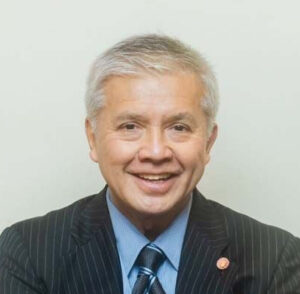
Professor Docter Koonlawee Nademanee, M.D.
Director, Center of Excellence in Cardiac Arrhythmia Research, Chulalongkorn University
Special Instructor, Faculty of Medicine, Chulalongkorn University
The Kingdom of Thailand
Professor Docter Koonlawee Nademanee is an internationally renowned Thai physician and scientist and a pioneer in cardiac electrophysiology. Following his specialized training in cardiology and cardiac electrophysiology in the United States, he held academic positions at leading universities, including the University of California at Los Angeles (UCLA), the University of Colorado, and the University of Southern California (USC), establishing himself as a leading expert in cardiac arrhythmias and sudden cardiac arrest. His work has fundamentally transformed the understanding and treatment guidelines for Sudden Unexpected Nocturnal Death Syndrome (SUNDS)—known in Thailand as “Lai Tai”—and Brugada syndrome, a potentially life-threatening heart rhythm disorder.
For decades, Lai Tai was one of Southeast Asia’s major medical mysteries. Seemingly healthy young individuals would die suddenly, typically during sleep, with no discernible cause. Professor Dr. Koonlawee pioneered the study of cardiac electrical abnormalities associated with these deaths and helped prove their link to Brugada syndrome and other inherited arrhythmias. This body of work transformed a once-mysterious condition into a diagnosable heart disease, enabling physicians to identify at-risk individuals, screen family members, and establish preventative strategies against sudden cardiac death.
Professor Dr. Koonlawee translated this knowledge into life-saving treatments. The DEBUT (Defibrillator versus Beta-Blockers for Unexplained Death in Thailand) trial demonstrated the benefits of implantable cardioverter-defibrillators (ICDs) in patients at risk of sudden death from unexplained arrhythmias. Subsequently, he discovered the myocardial tissue regions responsible for originating ventricular fibrillation in Brugada syndrome patients and pioneered catheter ablation of these areas to prevent recurrent, severe arrhythmias.
The BRAVE (Brugada Syndrome Ablation for the Prevention of Ventricular Fibrillation) trial provided robust randomized controlled trial evidence supporting catheter ablation therapy in patients with Brugada syndrome. This represents an extraordinary continuum ranging from clinical observation and the discovery of disease mechanisms to the development and clinical validation of treatment methods. These achievements have profoundly influenced international clinical practice in cardiac electrophysiology and elevated the standard of care for patients and families at risk of sudden cardiac death.
From its origins in investigating the Lai Tai phenomenon in Thailand, the work of Professor Docter Koonlawee Nademanee has driven monumental global shifts in the understanding, prevention, and treatment of sudden cardiac death. Through his pioneering work elucidating the cardiac basis of SUNDS, advancing the knowledge and management of Brugada syndrome, and initiating life-saving therapeutic guidelines, Professor Docter Koonlawee Nademanee has made a profound contribution to the field of cardiology, benefiting patients and families worldwide.
Prince Mahidol Award Laureate 2026
Field of Public Health
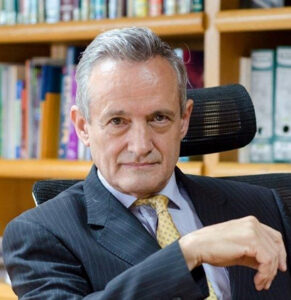
Emeritus Professor Docter Juan A. Rivera Dommarco, M.S., PhD
Professor and Researcher, National Institute of Public Health
The United Mexican States
Emeritus Professor Docter Juan A. Rivera Dommarco is a professor and researcher at the National Institute of Public Health of Mexico. His lifelong research in nutrition and health since the 1980s has made significant contributions to humanity and continuously fostered the knowledge and capabilities of countless generations of scientists in this field.
Over the past four decades, he has proven that rigorous science applied strictly according to evidence-based principles can transform the health of people worldwide. He unravelled the relationships between poverty, malnutrition, and child development through empirical data on early childhood development during the first 1,000 days of life. This was demonstrated in a 50-year cohort evaluation study running from its inception until 2017, which tracked two sample groups between 1969 and 1977: a) an intervention group receiving high-energy, high-protein dietary supplements, compared to b) a control group receiving low-energy supplements with no protein. The study targeted three population groups—pregnant women, lactating mothers, and children under seven years of age—while providing free health education and primary healthcare support.
The results showed improved fetal development in the intervention group, higher survival rates, faster and more complete growth during early childhood, and superior cognitive abilities, academic performance, and practical skills. Furthermore, these individuals transitioned into healthy adulthoods, forming a stronger next generation. His work contributed to supporting the WHO–UNICEF Nurturing Care Framework as well as the World Bank’s framework for investing in early childhood.
To tackle the obesity crisis, his research demonstrated the powerful role of fiscal measures in addressing environments conducive to overweight conditions, alongside regulations and dietary guidelines. His driving force and rigorous evaluation led to the successful implementation of the sugar-sweetened beverage tax in Mexico. Backed by empirical evidence of its health and economic impacts, 44 countries enacted sugary drink tax legislation within two years following Mexico’s implementation. Currently, Professor Juan Rivera Dommarco’s research focuses on developing sustainable food systems through climate-resilient agriculture.
His work emphasizes an end-to-end continuous process: a) generating empirical evidence, b) designing policies and policy interventions, and c) rigorously evaluating outcomes. This approach continuously yields new evidence to further refine and enhance the effectiveness of future interventions.
**********
Download >> Announcement2026_Eng <<
